Key Takeaways
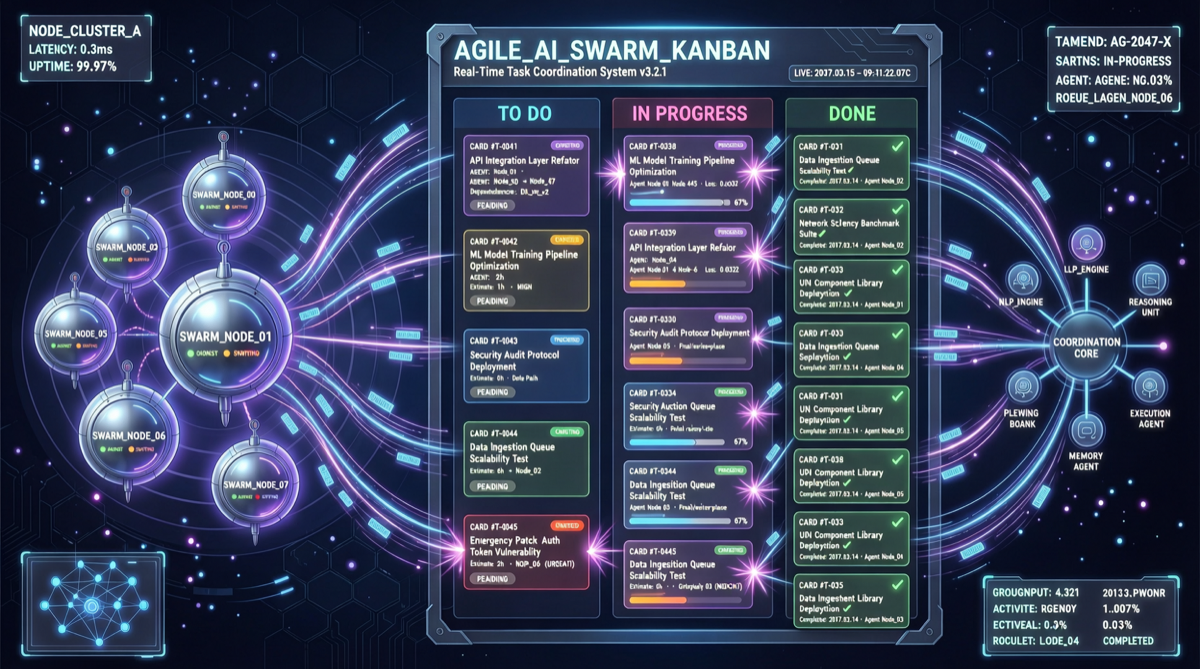
Moonshot AI has officially confirmed: Kimi K2.6 will be released in June 2026, as open-weights under a Modified MIT license, with free API and Cloud access. Unlike previous versions, K2.6 represents a fundamental shift in positioning — from “conversational AI” to “autonomous execution engine,” specifically designed for long-horizon software engineering and multi-Agent Swarm orchestration scenarios.
What Happened
Multiple sources from Moonshot AI and the community cross-verify the following key information:
| Dimension | Kimi K2.6 Key Information |
|---|---|
| Release Date | June 2026 |
| Open-Source Strategy | Open-weights + Modified MIT license |
| Core Positioning | Coding-driven |
| Key Scenarios | Long-horizon software engineering, Swarm task orchestration, iterative development |
| Cost | Free (API + Cloud) |
| Deployment Options | HuggingFace download, Cloudflare Workers edge deployment |
Notably, K2.6 has already seen a 3x usage surge among Go language developers, and the free quota has been extended multiple times in succession — reflecting sustained real demand rather than short-term curiosity.
Why It Matters
1. Paradigm Shift: From “Coding Assistant” to “Autonomous Execution”
K2.6’s design philosophy differs fundamentally from all previous Chinese models. Most domestic models (including Qwen3.6, DeepSeek V4) still optimize for “single-turn conversation quality” — scoring high on benchmarks and giving better responses in dialogue.
K2.6 optimizes for sustained autonomous execution. This means:
- The model needs to maintain task understanding consistency over long-running sessions
- It must be capable of discovering and correcting errors autonomously during execution
- It supports Swarm-level multi-Agent collaboration, not just single-Agent single-task workflows
2. Swarm Orchestration: First Systematic Support Among Chinese Models
Swarm-based task orchestration is currently a frontier in the Agent framework space. Anthropic’s Claude supports multi-file editing in Code scenarios, but has yet to natively support multi-Agent parallel collaboration.
If K2.6 truly supports Swarm orchestration at the model level, it would represent a significant differentiator for Chinese models. This means:
- Multiple K2.6 instances can process sub-tasks in parallel
- Automatic task distribution, blocking detection, and result aggregation
- Reduced human intervention, enabling “set goal → wait for completion” workflows
3. The Free + Open-Source + Edge Deployment Combo
The combination of Modified MIT license + free API + Cloudflare Workers deployment creates a unique market position:
| Competitor | Open-Source | Free API | Edge Deployment |
|---|---|---|---|
| Kimi K2.6 | ✅ | ✅ | ✅ |
| Qwen3.6 | ✅ | ❌ (paid) | Partial |
| DeepSeek V4 | ✅ | ✅ | ❌ |
| Claude 4.x | ❌ | ❌ | ❌ |
Landscape Assessment
Kimi K2.6’s release will reshape the landscape on two levels:
Model layer: Chinese coding models are moving from “single-point breakthroughs” into the “systems engineering” phase. K2.6 is no longer trying to beat Claude in single-turn dialogue — it’s attempting to build an advantage in the new dimension of sustained autonomous execution.
Ecosystem layer: The free + open-source + edge deployment combo will dramatically lower the barrier for small and medium teams to deploy Agent systems. Cloudflare Workers’ free tier means individual developers can run autonomous Agents at zero cost.
Action Recommendations
- If you’re building multi-Agent systems: K2.6’s Swarm orchestration capabilities are worth watching — test locally as soon as it releases in June
- If you use Cloudflare Workers: Prepare your deployment environment in advance — K2.6’s edge deployment could become the lowest-cost Agent solution
- If you’re selecting a coding model: Community comparisons of K2.6 vs GLM-5.1 vs DeepSeek V4 Pro are already circulating — wait for June and run a new round of benchmarks