Key Takeaway
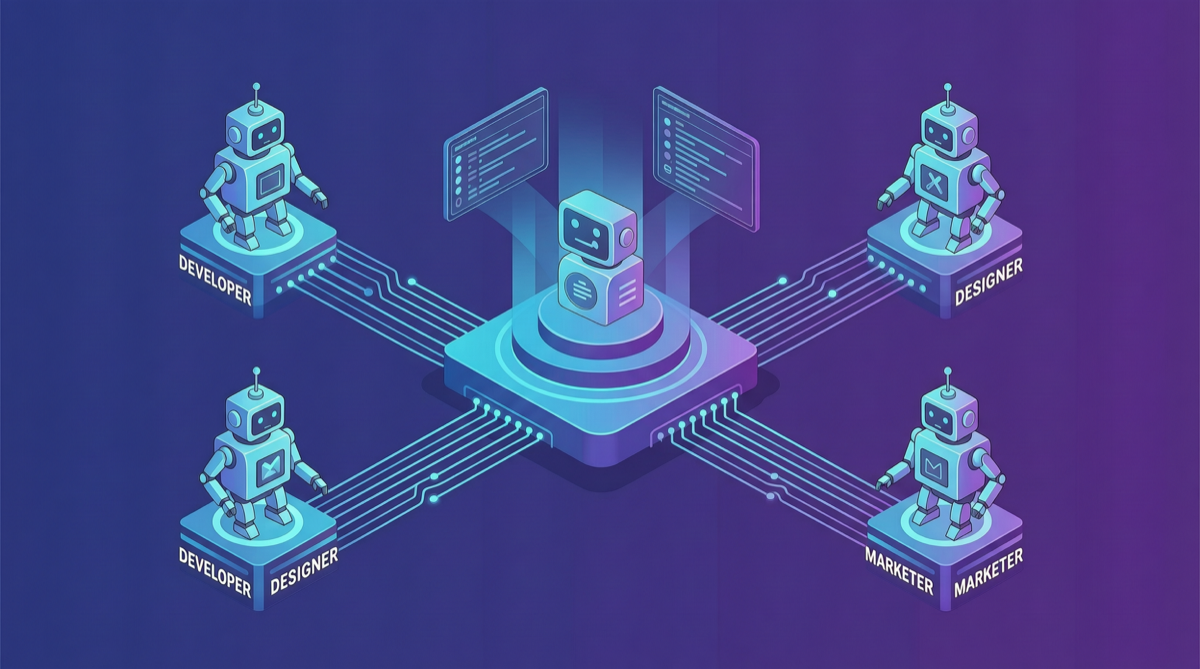
Sim is not an agent framework — it’s an operating system for agents. The core problem it solves: when you have 10, 20, or even 100 AI agents, how do you get them to coordinate instead of conflicting with each other? Sim’s answer is a “central intelligence layer” — unified scheduling, unified monitoring, unified optimization.
Why Now
Sam Altman recently said in an interview: “I envy people who are starting companies in 2026. One person today can run a business that would have required 20 people in 2020.”
This isn’t motivational talk — it’s reality unfolding:
- Engineering: Claude Code writes products
- Advertising: Higgsfield generates 500 video ads per day
- Customer support: OpenWebBot and other open-source solutions handle support with zero watermarks
- Operations: Sim orchestrates all of this
But here’s the catch: these agents operate in silos with no coordination mechanism. That’s what Sim is built to solve.
Sim’s Architecture
Sim positions itself as a three-layer architecture:
| Layer | Function | Analogy |
|---|---|---|
| Build Layer | Define agent roles, skills, and permissions | Hiring + Job descriptions |
| Deploy Layer | Deploy agents to production, configure resources | Employee onboarding + Desk assignment |
| Orchestration Layer | Multi-agent collaboration, task distribution, conflict resolution | Manager + PMO |
Comparison with Similar Solutions
| Platform | Positioning | Agent Count | Orchestration | Open Source |
|---|---|---|---|---|
| Sim | Central intelligence layer for AI labor | Unlimited | Full workflow orchestration | ✅ 28K stars |
| LangChain | Agent development framework | Unlimited | Basic chain orchestration | ✅ |
| CrewAI | Multi-agent role collaboration | Medium | Role assignment + task distribution | ✅ |
| Dify | AI application development platform | Limited | Visual workflow orchestration | ✅ |
| The Agency | 147 professional agent templates | 147 | Predefined organizational structure | ✅ 50K stars |
What makes Sim unique is that unlike The Agency, which offers predefined agent roles, Sim provides general-purpose infrastructure that lets you define any agent role and collaboration relationship yourself.
Typical Use Cases
Use Case 1: E-Commerce Operations Automation
Product Agent (write descriptions) → Design Agent (generate images) → Marketing Agent (run ads) → Support Agent (handle inquiries)Use Case 2: Content Production Pipeline
Topic Agent (trend analysis) → Writing Agent (draft generation) → Review Agent (quality check) → Publishing Agent (multi-platform distribution)Use Case 3: Software Development Team
Product Agent (requirements analysis) → Dev Agent (coding) → Test Agent (automated testing) → Deploy Agent (CI/CD)Onboarding Cost
- Learning curve: Medium — requires understanding of basic agent orchestration concepts
- Deployment: Supports Docker deployment, modest infrastructure requirements
- Integration: Connects to existing toolchains via API, no forced replacement
Who It’s For
- Independent developers/entrepreneurs: Build automated business pipelines with Sim
- Small teams: Use AI agents to fill manpower gaps
- Large enterprises: Serve as a unified management platform for internal agent infrastructure
Who It’s NOT For
- Single-agent scenarios: LangChain or CrewAI are more lightweight
- Deeply customized agent logic: Sim’s orchestration layer may be less flexible than native frameworks
- No clear workflow: Sim solves coordination problems, not agent capability problems
Industry Significance
Sim represents the evolution of the AI agent ecosystem from “tools” to “infrastructure.” While The Agency demonstrated the possibility of an “AI company” with 147 predefined agents, Sim provides the infrastructure for anyone to define their own “AI company.”
With Claude Code already contributing 4% of GitHub commits, AI agents are no longer experiments — they are real productivity units. Sim’s mission is to enable these productivity units to work together.