Key Takeaway
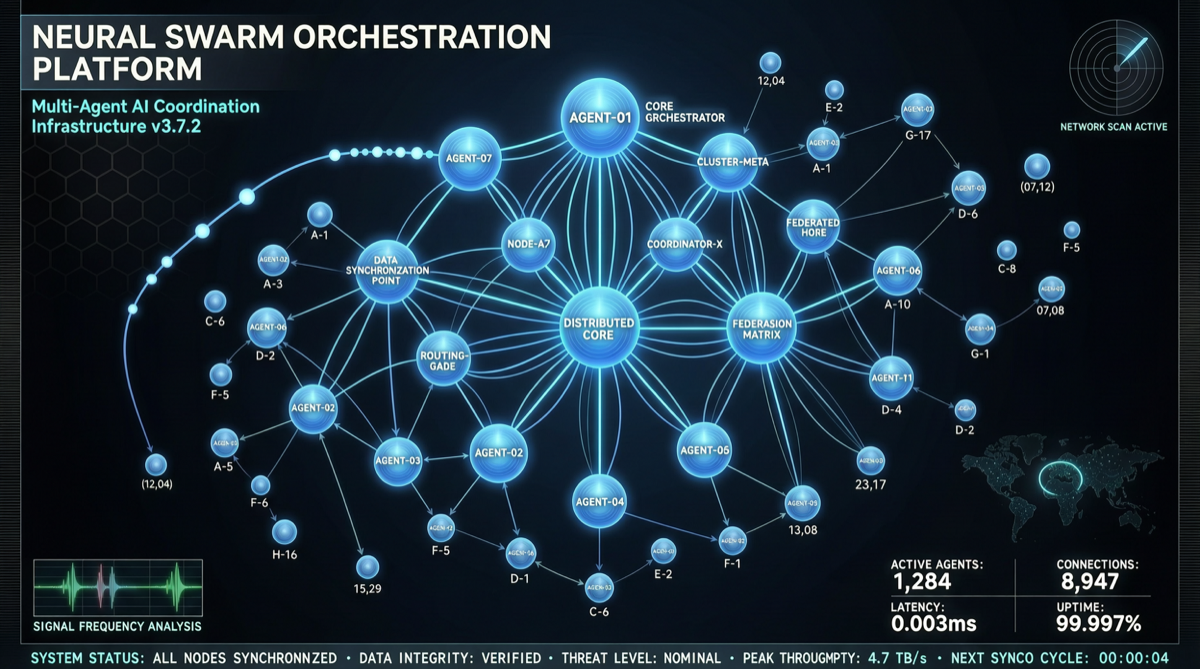
Claude Code is a powerful coding assistant, but it’s fundamentally a “lone soldier” agent. Ruflo (formerly Claude Flow) is solving this — it gives Claude Code a complete nervous system: multiple agents can self-organize into swarms, learn from every task, remember across sessions, and even communicate securely between agents on different machines.
Currently at 36,197 stars with 1,258 new stars today, Ruflo ranks #2 on GitHub Trending. Its core strength isn’t any single feature, but rather integrating scattered agent capabilities into a programmable orchestration system.
What Problem Ruflo Sololves
If you only use Claude Code to write code, you’ve likely felt these pain points:
- Complex tasks can’t be decomposed: Refactoring a large codebase involves multiple steps, and a single agent easily loses context
- Knowledge can’t accumulate: Every conversation starts fresh — the agent doesn’t remember what it did last time
- No cross-project collaboration: Agents on Project A and Project B are isolated islands
- Missing security boundaries: In enterprise environments, you can’t control which data agents access
Ruflo addresses these through a four-layer architecture:
User → Ruflo (CLI/MCP) → Router → Agent Swarm → Memory System → LLM Providers
                           ↑                                     ↓
                           └── Self-Learning Loop ←──────────────┘
Core Capabilities Breakdown
1. Agent Swarm Orchestration
Ruflo’s core innovation is Swarm mode — letting multiple specialized agents work together. Unlike traditional multi-agent frameworks (like CrewAI which requires writing Python code), Ruflo makes orchestration declarative through its plugin system:
ruflo-swarm: Distribute tasks across multiple agents for parallel processingruflo-autopilot: Let agents run autonomously in loops until tasks completeruflo-workflows: Define reusable multi-step task templatesruflo-federation: Secure collaboration between agents on different machines
This means you can have one agent do research, one write code, and one run tests — they coordinate automatically instead of you manually switching.
2. Self-Learning Memory System
Most agent frameworks treat memory as an “add-on.” Ruflo makes it a first-class citizen:
| Plugin | Function |
|---|---|
ruflo-agentdb | Vector database for fast agent memory retrieval |
ruflo-rag-memory | Hybrid search + graph hops + diversity ranking |
ruflo-rvf | Cross-session memory save and restore |
ruflo-knowledge-graph | Build and traverse entity relationship graphs |
Key difference: Ruflo’s memory isn’t just chat history storage. Through the ruflo-intelligence plugin, agents learn from past success patterns and automatically optimize future task allocation strategies.
3. Plugin Ecosystem: 32 Ready-to-Use Plugins
Ruflo’s plugins cover the full chain from development to operations:
Code Quality & Security
ruflo-testgen: Automatically discover missing tests and generate themruflo-browser: Playwright-driven browser automation testingruflo-security-audit: CVE vulnerability scanningruflo-aidefence: Prevent prompt injection, detect PII leakage
DevOps & Observability
ruflo-observability: Structured logs, traces, and metrics in one placeruflo-cost-tracker: Token usage tracking with budget alertsruflo-migrations: Safe database schema change management
Architecture & Methodology
ruflo-adr: Architecture decision recordsruflo-ddd: Domain-driven design scaffoldingruflo-sparc: Five-phase development methodology with quality gates
Technical Architecture Highlights
Ruflo has two noteworthy technical choices at its core:
WASM Sandbox Engine: The core policy engine, embedding computation, and proof system are written in Rust and compiled to WebAssembly. This means plugins can execute safely in a sandbox without giving agents full system privileges — critical for enterprise deployment.
Native MCP Integration: Ruflo connects directly to Claude Code as an MCP Server with just one command:
claude mcp add ruflo -- npx -y @claude-flow/cli@latestAfter installation, Claude Code automatically gains 100+ MCP tools, 64 Skills, and 25 Commands — users don’t need to learn new commands and continue interacting in natural language while Ruflo handles task routing in the background.
Comparison with Alternatives
| Dimension | Ruflo | CrewAI | LangGraph | AutoGen |
|---|---|---|---|---|
| Programming Model | Declarative plugins + MCP | Python code | Python code | Python code |
| Integration | Claude Code native plugin | Standalone framework | Standalone framework | Standalone framework |
| Memory System | Built-in vector DB + graph + learning loop | Requires external storage | Requires external storage | Requires external storage |
| Cross-Machine Communication | Native federation | ❌ | ❌ | Limited |
| Security Sandbox | WASM isolation | ❌ | ❌ | ❌ |
| Onboarding | One-line install | Requires coding | Requires coding | Requires coding |
Ruflo’s uniqueness lies in not building an agent framework from scratch — it stands on Claude Code’s shoulders to deliver incremental value, giving it an extremely low adoption barrier.
Getting Started
# Option 1: Global npm install
npm install -g ruflo@latest
ruflo init --wizard

# Option 2: As a Claude Code plugin
/plugin marketplace add ruvnet/ruflo
/plugin install ruflo-core@ruflo
/plugin install ruflo-swarm@ruflo

# Option 3: One-line script
curl -fsSL https://cdn.jsdelivr.net/gh/ruvnet/ruflo@main/scripts/install.sh | bash
After installation, you don’t need to memorize 314 MCP tools or 26 CLI commands — the hook system automatically routes tasks, learns from successful patterns, and coordinates agents in the background.
Summary
Ruflo represents an interesting trend: the “orchestration layer” for AI agents is becoming a standalone product category. It doesn’t replace Claude Code — it transforms Claude Code from a tool into a system.
For teams, this means agents can evolve from “personal productivity tools” into “team collaboration infrastructure” — multiple agents processing complex tasks in parallel, sharing knowledge across projects, and protecting data boundaries through federated communication. The growth to 36k stars shows this direction hits a real developer pain point.
Agent orchestration is moving from “academic concept” to “engineering reality.” When 100+ specialized agents can collaborate automatically, the way we write code may truly be changing.