What Happened
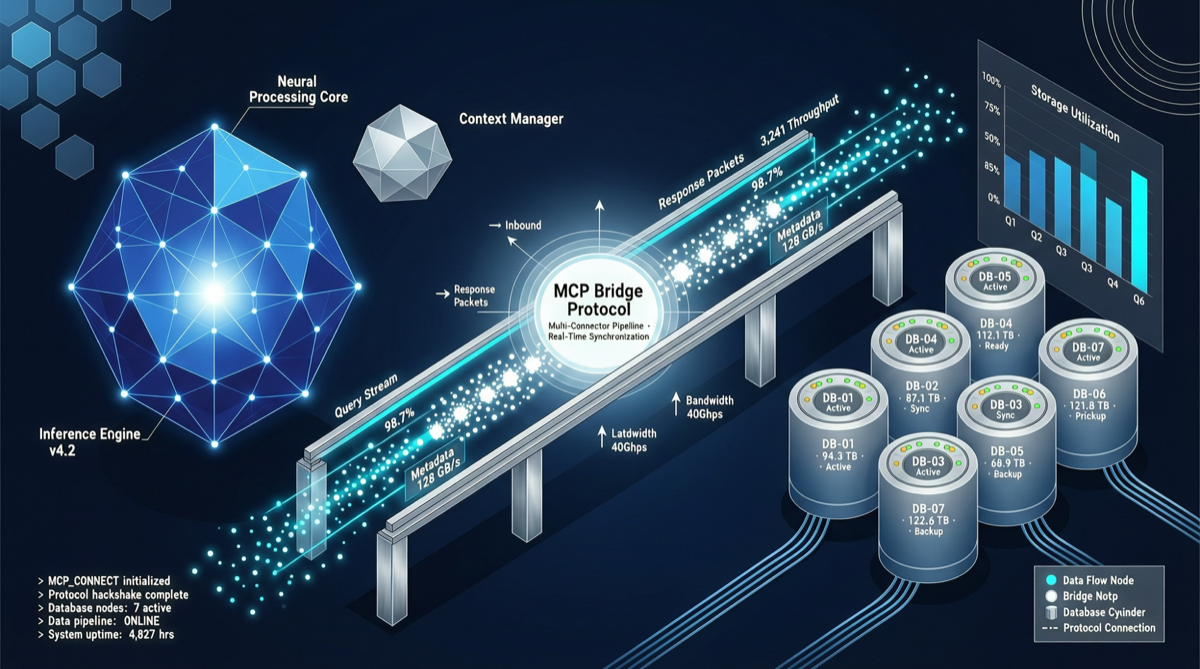
A post on X that received 64 bookmarks reveals a trend worth watching: MCP (Model Context Protocol)-based database connectors are becoming the standard solution for AI agents to access enterprise databases.
These tools enable AI agents to directly query and operate enterprise databases through the MCP protocol, without needing to write customized integration code for each database.
What Pain Points It Solves
The Traditional Approach
Before MCP database connectors, letting AI agents access databases typically required:
- Writing custom APIs: Dedicated data access layers for each database system (PostgreSQL, MySQL, MongoDB, etc.)
- Maintaining authentication logic: Manually handling connection pools, credential management, access control
- Processing schema mapping: Converting database table structures into agent-understandable formats
- Writing SQL security layers: Preventing agents from generating dangerous SQL (DROP TABLE, DELETE, etc.)
Each new database meant going through this process again.
The MCP Solution Changes This
MCP database connectors standardize the above process:
| Aspect | Traditional Approach | MCP Approach |
|---|---|---|
| Protocol adaptation | One set per database | Unified MCP protocol |
| Authentication management | Manual handling | Built into MCP Server |
| Schema discovery | Manual configuration | Automatic discovery |
| SQL security | Self-implemented | Built-in sandbox in connector |
| Development time | Days/weeks | Minutes/hours |
Architecture Principles
┌─────────────┐     MCP Protocol     ┌──────────────────┐     SQL      ┌──────────┐
│  AI Agent   │ ◄──────────────────► │  MCP DB Server   │ ◄──────────► │ Database │
│ (Claude/    │                      │ (Connector)      │              │ (PG/MySQL│
│  GPT/etc)   │                      │                  │              │  /Mongo) │
└─────────────┘                      └──────────────────┘              └──────────┘
     │                                      │
     │  natural language queries             │  schema discovery
     │  tool calls                          │  query execution
     │  result interpretation               │  result formatting
     └──────────────────────────────────────┘
The MCP DB Server acts as a middle layer, exposing standardized tools to the AI agent:
query: Execute SELECT queriesschema: Get table structure informationexecute: Execute write operations (requires permission)describe: Get database metadata
Security Considerations
The biggest risk of direct database connection to agents is security. A runaway agent might:
- Execute
DROP TABLEto delete data - Leak sensitive information
- Cause SQL injection
Mature MCP database connectors typically include these security mechanisms:
| Security Measure | Description |
|---|---|
| Read-only mode | Only SELECT allowed by default, write operations require explicit authorization |
| Row-level permissions | Limit accessible data rows based on agent identity |
| Query sandbox | Execute SQL in an isolated environment to prevent destructive operations |
| Audit logs | Record all agent database operations |
- Rate limiting: Prevent agents from issuing excessive queries that slow down the database
Use Cases
1. Data Analysis Agents
Analysts ask questions in natural language, agents automatically translate to SQL queries and return results:
- “What was the sales revenue in East China last month?”
- “Compare user growth rates between Q1 and Q2”
2. Operations Monitoring Agents
Ops agents periodically query database status and automatically alert:
- “Check the slow query list”
- “Monitor connection pool utilization”
3. Customer Service Agents
Customer service agents query user data to provide personalized service:
- “Check user order status”
- “Check account balance”
How to Get Started
- Choose an MCP database connector: Multiple open-source implementations available on GitHub
- Configure database connection: Set connection strings and permissions
- Register as agent’s MCP Server: Add MCP endpoint in agent configuration
- Test queries: Test whether the agent can correctly query the database using natural language
Landscape Assessment
MCP is becoming the de facto standard for AI agent integration with external systems. From file access, API calls, to now database direct connection, MCP’s ecosystem is expanding rapidly.
For enterprises, evaluating the maturity and security of MCP database connectors early and preparing for large-scale agent deployment is advisable. This field is still in its early stages, and early movers have the greatest opportunity to define best practices.