What Happened
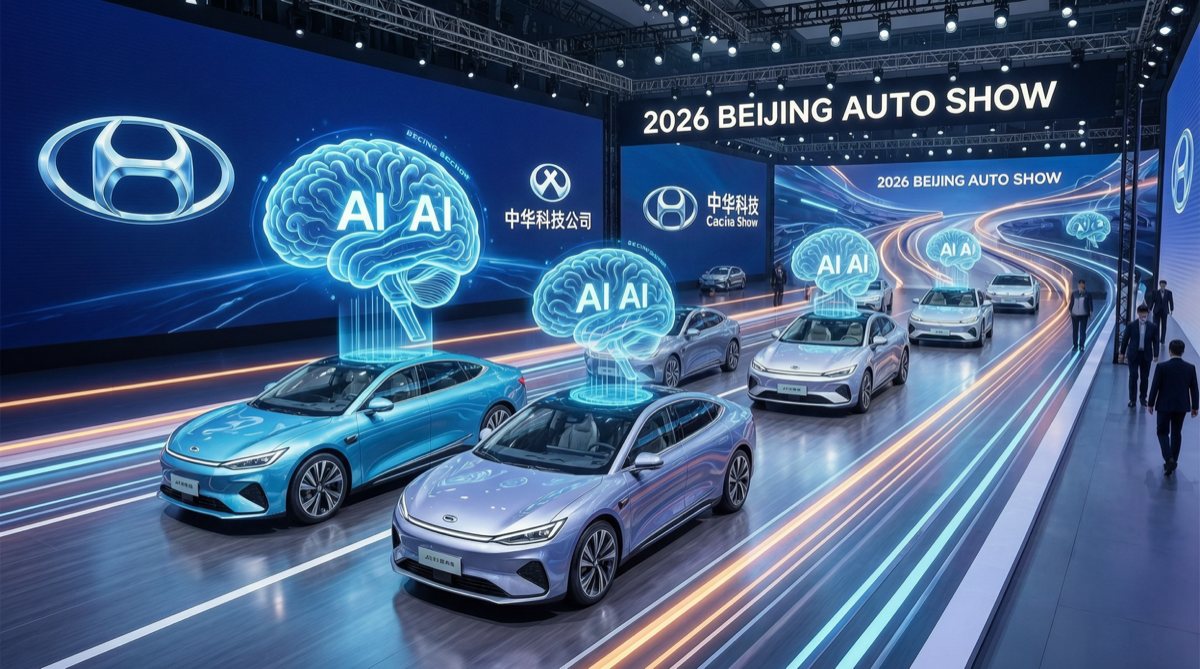
At the 2026 Beijing International Auto Show, AI large models became a hotter topic than the new cars themselves:
- ByteDance Doubao: 50+ car brands announced integration
- Alibaba Qwen (Tongyi Qianwen): Secured BYD, Li Auto, Geely, and a Volkswagen joint venture
This is not simple tech partnership news. In-car AI is becoming the next “gateway battle” after smartphones.
Landscape Comparison
Two Camps’ Automotive Footprint
| Model | Partner Brands | Partnership Scale | Strategic Positioning |
|---|---|---|---|
| Doubao (ByteDance) | 50+ brands | Wide coverage | ”Android of in-car AI” — volume strategy |
| Qwen (Alibaba) | BYD, Li Auto, Geely, VW JV | Precision top-tier | ”iOS of in-car AI” — quality strategy |
Technical Route Differences
| Dimension | Doubao | Qwen |
|---|---|---|
| Model Strategy | Lightweight + fast iteration | Large parameters + deep optimization |
| Integration Method | Standardized API access | Deep customization + joint development |
| Ecosystem Advantage | Douyin content ecosystem funnel | Alibaba Cloud + Amap synergy |
| Core Scenarios | Voice interaction + entertainment recommendation | Smart driving + in-car productivity |
Deep Logic: The Battle for Control
Why Now?
Smart cars in 2026 are at the “feature phone → smartphone” inflection point:
- Cabin intelligence: Evolving from simple voice assistants to complete AI companions
- Autonomous driving upgrade: End-to-end large models give vehicles scene understanding capabilities
- Software-defined vehicles: OTA updates allow model capabilities to continuously evolve
Whoever installs the AI model in the car controls user data, interaction gateways, and service distribution.
Strategic Intent: ByteDance vs Alibaba
ByteDance:
- Doubao’s core advantage in in-car scenarios is the content ecosystem — Douyin and Toutiao’s massive content can be directly injected into in-car entertainment
- The 50+ brand strategy is “volume-first” — capture market share first, then optimize the model through user data
- Risk: Broad coverage but shallow depth; may be seen by automakers as a “standardized component” rather than a “strategic partner”
Alibaba:
- Qwen’s advantage lies in infrastructure synergy — Alibaba Cloud’s computing power, Amap’s location services, Cainiao’s logistics data
- Precision targeting of top automakers is “depth-first” — deep collaboration with BYD, Li Auto, etc., creating benchmark cases
- Risk: Narrower coverage; if top automakers pivot to other solutions, the impact is larger
Action Recommendations
For Automakers
| Decision | Recommendation |
|---|---|
| Choose model or platform | If you only need voice interaction, choose Doubao; if you need smart driving + data synergy, choose Qwen |
| Build in-house or integrate | Top automakers (1M+ annual sales): hybrid approach with in-house + third-party. Mid-size: directly adopt mature solutions |
| Multi-model strategy | Consider integrating multiple models — Doubao for entertainment, Qwen for driving — reducing single-supplier risk |
For Developers
- In-car AI is a new application blue ocean: Similar to mobile app development in 2010
- Watch Qwen and Doubao’s in-car SDKs: Both platforms are recruiting developers for in-car scenarios
- Voice interaction + multimodal is the core capability direction for in-car AI
- Edge computing is the trend — in-car models need to run locally, not entirely dependent on the cloud
Trend Assessment
This auto show AI battle sends three signals:
- The “Android vs iOS” pattern of in-car AI is taking shape: Doubao for volume, Qwen for quality
- Chinese AI model application scenarios are expanding from phones/PCs to cars: This is an incremental market larger than the internet
- Tech company-automaker cooperation models are upgrading: From “vendor-purchaser” to “joint development + data sharing”
At the 2026 Beijing Auto Show, AI is no longer a “nice-to-have” selling point — it is the core variable determining automakers’ competitiveness over the next 5 years. The battle between ByteDance and Alibaba is just the beginning.