Bottom Line: The “Chaos Tax” of Multi-Agent Collaboration Is Finally Being Collected
When you ask AI to handle multiple programming tasks simultaneously, the most common problems are: Task A’s output is Task B’s input, but the Agent doesn’t know this dependency; or 5 Agents modify the same file simultaneously, resulting in merge conflicts everywhere.
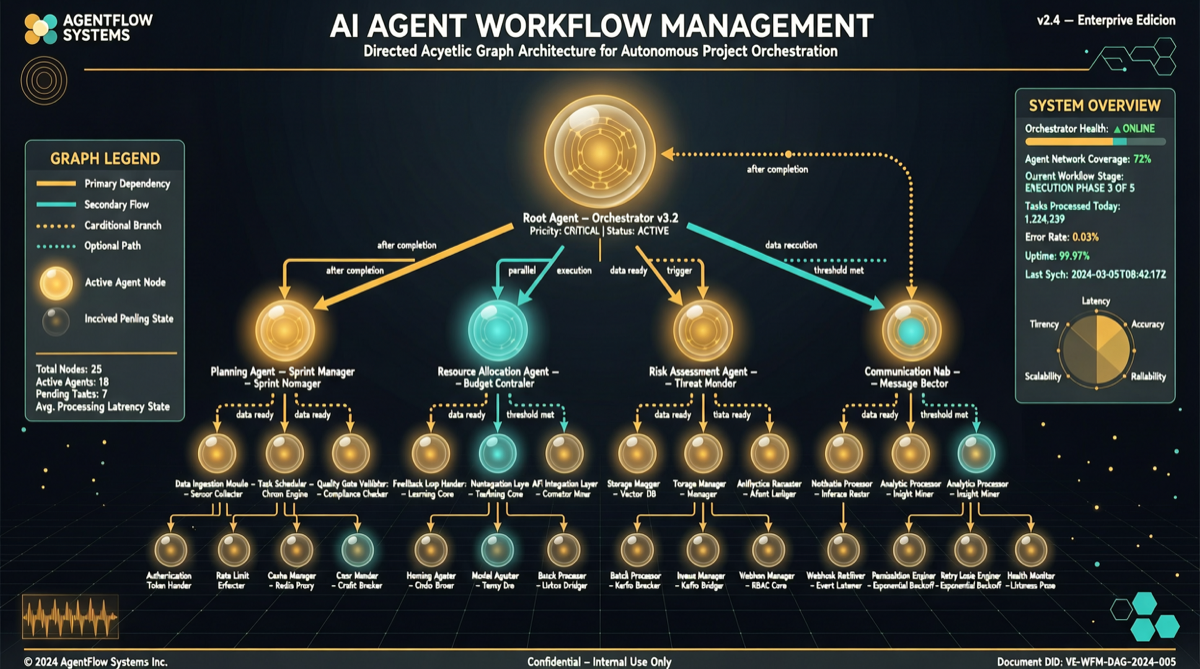
Beads is a new project that hit GitHub Trending. Its core approach is direct — use Directed Acyclic Graphs (DAGs) to manage AI Agent task dependencies, just like a project manager uses Gantt charts to manage human teams.
Pain Points: Why Multi-Agent Programming Always Goes Haywire
| Scenario | Without Beads | With Beads |
|---|---|---|
| Task breakdown | Manual descriptions, Agents work independently | Auto-built dependency graph, clear inter-task relationships |
| Context passing | Agents remember context themselves | DAG explicitly annotates data flow, context auto-injected |
| Conflict detection | Discover conflicts only when multiple Agents edit same file | Dependency graph exposes parallel conflicts in advance |
| Progress tracking | Scroll terminal logs to see what’s done | Visual DAG, node colors indicate status |
| Failure rollback | Manually trace failure impact scope | Auto-mark dependent failed nodes, block downstream |
Solution: How Beads Works
Core Architecture: Task Dependency Graph
Beads breaks complex programming tasks into nodes (Beads) and edges (dependencies):
Each Bead contains:
- Task description: Natural language or structured instructions
- Input dependencies: Which upstream Beads’ outputs are needed
- Output artifacts: Files/data generated upon completion
- Execution status: pending / running / done / failed
- Assigned Agent: Which Agent is responsible
Key Features
- Dependency-driven scheduling: Downstream Beads only execute when all upstream dependencies are complete
- Auto context injection: Upstream outputs automatically flow to downstream contexts
- Conflict pre-detection: If two parallel Beads need to modify the same file, Beads flags it in advance
- Incremental retry: When a Bead fails, only retry the failed node and its downstream
- Visual dashboard: Real-time DAG execution progress with node drilling
Comparison
| Solution | Task Modeling | Dependency Mgmt | Context Passing | Agent Adaptation | Visualization |
|---|---|---|---|---|---|
| Beads | DAG | Auto-inferred | Auto-injected | Multi-Agent native | Graphical |
| Claude Code built-in | List | Manual | Manual | Single Agent | Terminal |
| LangGraph | Graph | Manual definition | Manual | Multi-Agent | Limited |
| CrewAI | Flow | Partial auto | Partial auto | Multi-Agent | Limited |
Beads’ core advantage: It’s the first task dependency management system designed specifically for AI coding assistants rather than general Agent frameworks.
Getting Started
pip install beads-agentfrom beads import Bead, BeadGraph
graph = BeadGraph()
graph.add_bead("analyze", "Analyze requirements")
graph.add_bead("design", "Design architecture", depends_on=["analyze"])
graph.add_bead("dev", "Develop core module", depends_on=["design"])
graph.run(agent="claude-code")Use Cases
- Large refactoring: Break codebase refactoring into dependency-driven parallel tasks
- Feature development: Full workflow automation from requirements to deployment
- Bug fixes: Model the fix process (reproduce → locate → fix → test → verify) as a DAG
Actionable Advice
- Multi-task coding: Beads significantly reduces context loss and task chaos when handling 3+ tasks
- Team usage: Beads’ DAG definition files can be shared as “task specs” across teams
- Tool integration: Works with Claude Code, Cursor, Gemini CLI as a task scheduling layer