Core Conclusion
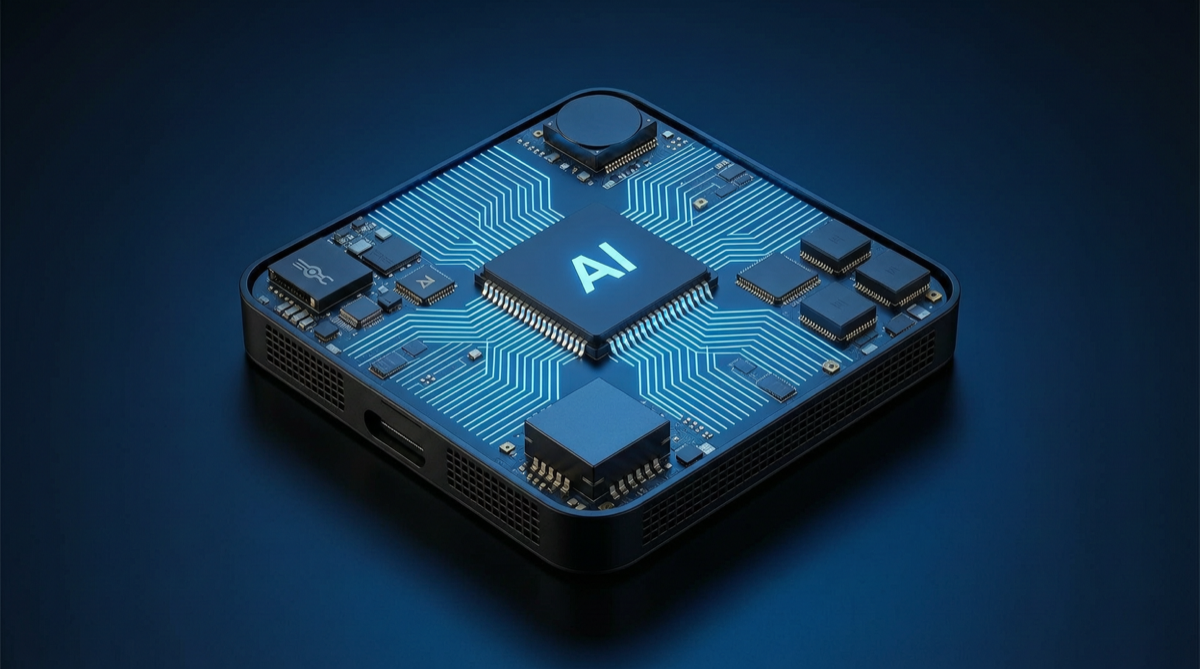
AMD plans to launch Halo Box in June 2026—a Mini PC with Ryzen AI MAX+ 395 processor, 128GB unified shared memory, full ROCm stack support, priced $2,000-3,000. This is the first product offering 200B parameter model local inference at consumer-grade pricing.
For developers tired of cloud API per-token billing and concerned about data privacy, this is a signal worth taking seriously.
Hardware Specifications
| Component | Spec | Significance |
|---|---|---|
| CPU | Ryzen AI MAX+ 395 (16 Zen 5 cores) | Strong general compute |
| GPU | 40 RDNA 3.5 CUs | GPU inference core |
| NPU | XDNA 2 (16 TOPS) | Low-power resident AI tasks |
| Memory | 128GB unified shared | CPU/GPU/NPU share, zero-copy |
| ROCm | Full support | Compatible with PyTorch, vLLM |
| Price | $2,000-3,000 | Consumer-grade pricing |
Key innovation: unified shared memory. Traditional GPU inference requires loading models from system memory to GPU VRAM, limited by PCIe bandwidth. Halo Box’s CPU, GPU, and NPU share the same 128GB memory pool:
- Zero data transfer overhead: Model loaded once, all compute units access same data
- 128GB = usable model size: Unlike discrete VRAM of 24GB/48GB, 128GB can hold 70B-200B parameter models
- Significant cost advantage: A single NVIDIA H100 80GB costs over $25,000
What Models Can It Run?
With INT4 quantization:
| Model | Quantized Size | Halo Box Runs? |
|---|---|---|
| Llama 3.1 70B | ~35GB | ✅ Easily |
| Qwen3.6-35B | ~18GB | ✅ Ample room |
| DeepSeek V4 MoE | ~70GB | ✅ Yes |
| Grok-1 314B | ~157GB | ⚠️ Near limit |
| 200B dense model | ~100GB | ✅ Yes |
Competitive Analysis: Halo Box vs NVIDIA DGX Spark
| Dimension | AMD Halo Box | NVIDIA DGX Spark |
|---|---|---|
| Price | $2,000-3,000 | $4,000-5,000+ |
| Memory | 128GB unified shared | 64GB LPDDR5X |
| GPU compute | 40 RDNA 3.5 CU | Grace + Orin |
| Software ecosystem | ROCm (improving) | CUDA (mature) |
| Target users | Devs/enthusiasts | Enterprise developers |
NVIDIA’s advantage is CUDA ecosystem maturity. But AMD’s ROCm has improved significantly, with PyTorch native support maturing. For workloads not depending on CUDA-specific optimizations, Halo Box’s price-performance is compelling.
Landscape Judgment: Local Inference’s “iPhone Moment”?
Halo Box’s launch may mark a new phase for local AI inference:
- Price barrier broken: $2,000-3,000 means individual devs and small teams can afford it
- Model choice freedom: Not limited to cloud API-supported models—run any open-source weights
- Data sovereignty returns: Sensitive data stays local, meeting compliance requirements
- Zero marginal cost: Inference costs approach electricity—more usage means better economics
Action Recommendations
| Your Scenario | Recommendation |
|---|---|
| High API costs | Halo Box inference costs approach electricity; teams spending $500+/month on APIs should consider |
| Data privacy sensitive | Healthcare, finance, legal—local deployment is compliance necessity |
| Model experimentation/fine-tuning | 128GB memory enables LoRA fine-tuning without cloud GPU rental |
| Existing NVIDIA ecosystem | If deeply dependent on CUDA optimization libraries, monitor ROCm maturity |
Launch: June 2026. Watch ROCm optimization progress for popular open-source models (Qwen, Llama, DeepSeek).