Core Findings
The tech industry layoffs in 2026 have hit record highs, but a disturbing pattern is emerging:
More and more companies are using “AI transformation” as a justification for layoffs, but the actual layoff decisions have no direct connection to AI capability deployment.
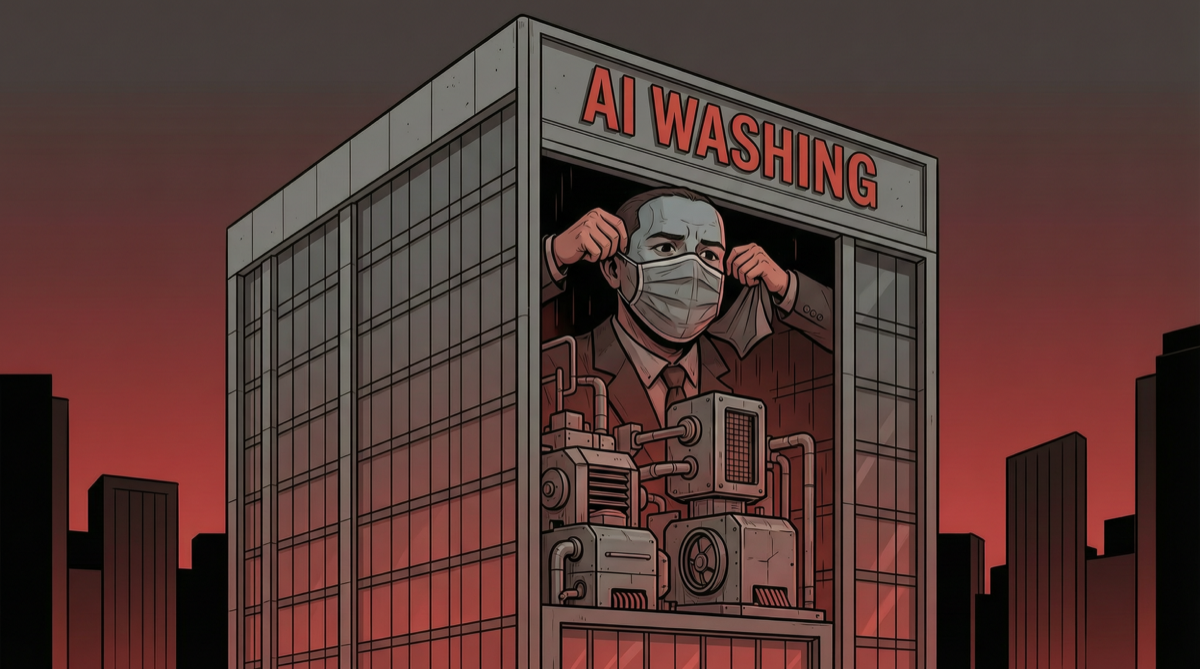
This phenomenon, dubbed “AI Washing” (analogous to “Greenwashing”), is spreading — companies using trendy technology narratives to package traditional cost-cutting behavior.
Data Perspective
| Metric | Data | Source |
|---|---|---|
| Tech industry layoffs in 2026 Q1 | 100,000+ | Public reports compilation |
| Layoffs citing “AI” as reason | ~68% | Layoff announcement analysis |
| Positions actually replaced by AI | Estimated <15% | Industry investigation |
| Companies increasing AI investment post-layoffs | ~22% | Financial report analysis |
The key contradiction: the number of positions claimed to be cut due to AI far exceeds the number actually replaced by AI.
Typical Case Patterns
Pattern 1: Announce AI transformation first, then mass layoffs A major tech company announced “full embrace of AI” in late 2025, then cut 3,000 positions in 2026 Q1, citing “AI will change how we work.” But insiders revealed the layoff list was finalized before the AI strategy was published — AI was simply a “decent excuse.”
Pattern 2: AI project investment disproportionate to layoff scale An e-commerce company laid off 5,000 people, claiming AI automation. But its annual AI budget accounts for only 0.3% of revenue, and no business line has achieved truly AI-driven operations.
Pattern 3: No increased AI investment after layoffs Financial reports show some companies that “laid off due to AI” actually decreased AI-related spending in the quarter following layoffs. Cost savings from layoffs went to share buybacks, not AI capability building.
Why “AI”?
Companies choose AI as a layoff justification for three motives:
1. Market narrative dividend “We are transforming to AI” → sounds like strategic upgrade “We are cutting costs” → sounds like operational distress
The impact on stock price is entirely different.
2. Reducing moral risk Using “technological progress” to explain layoffs shifts responsibility from management decisions to “irreversible trends” — “we didn’t want to lay off people, the AI era arrived.”
3. Setting the tone for subsequent hiring While cutting “traditional positions,” companies can rightfully recruit cheaper junior engineers under the banner of “AI era needs new talent.”
Advice for Job Seekers and Practitioners
Identifying real AI transformation vs AI Washing:
- ✅ Real AI transformation: Company simultaneously announces layoffs and AI talent expansion plans, with specific AI project roadmaps
- ❌ AI Washing: Only announces layoffs, no specific AI investment plans or talent needs
Career protection strategies:
- Focus on “AI-augmented” rather than “AI-replaced” roles: Positions requiring human judgment + AI tool usage are hardest to replace
- Master AI toolchains: Even if not an AI engineer, proficiency with mainstream AI tools significantly increases irreplaceability
- Beware of “transformation” narratives: When companies talk heavily about “AI transformation” without specific plans, it may be a prelude to layoffs
The Bigger Problem
“AI Washing” is not just a PR strategy issue — it brings three deeper risks:
- Public negativity toward AI intensifies: When people discover “AI layoffs” are mostly lies, acceptance of AI technology itself will decline
- Real AI transformation gets dragged down: Companies genuinely investing in AI will be questioned alongside
- Policy overreaction: If policymakers make decisions based on exaggerated “AI replacement” data, it could lead to unnecessary regulation
Bottom Line Judgment
AI will indeed change employment structure — this is an indisputable fact. But most tech industry layoffs in 2026 remain traditional cost optimization and business restructuring, with AI serving as a convenient narrative tool.
For the AI industry, this phenomenon is harmful. It creates unnecessary panic and blurs the issues that truly need attention: how to make AI technology create more new jobs, rather than letting companies use AI to package traditional layoffs.