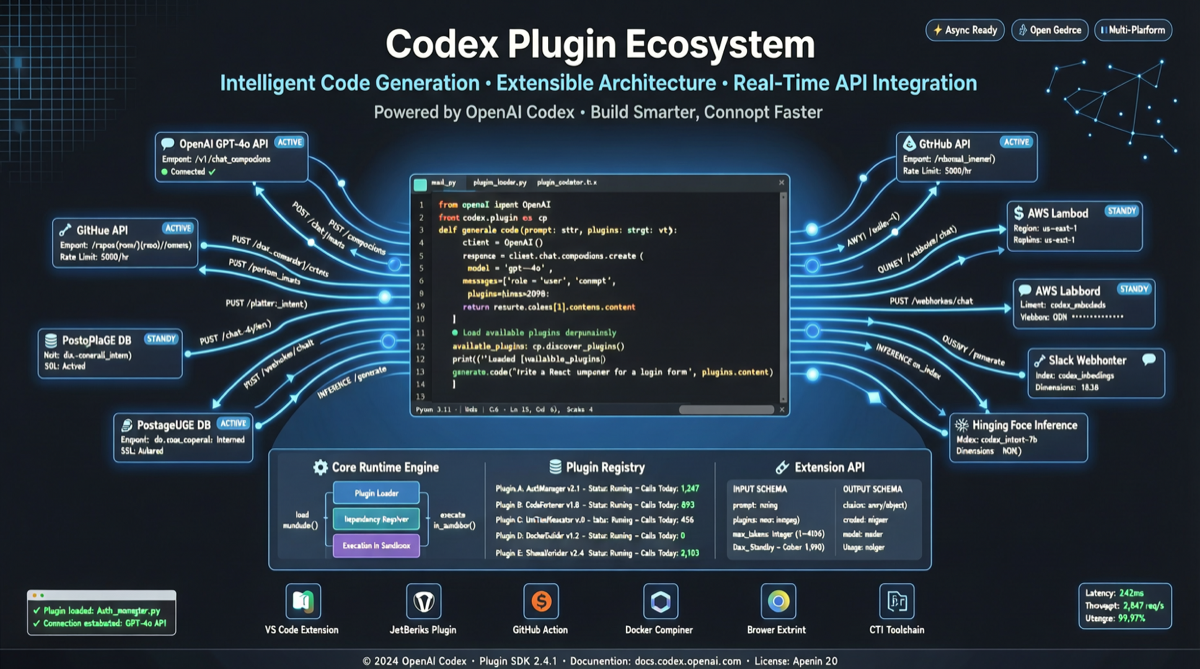
OpenAI quietly launched a new repo on GitHub: openai/plugins. Just crossed 1,000 stars, but what is inside matters.
What is in the repo
This is a collection of Codex plugin examples. Each plugin is a standalone directory with a clear structure:
plugins/<name>/
├── .codex-plugin/plugin.json   ← plugin manifest (required)
├── skills/                     ← skill definitions
├── .mcp.json                   ← MCP service config
├── agents/                     ← plugin-level agents
├── commands/                   ← custom commands
├── hooks.json                  ← hook configuration
└── assets/                     ← assets
The core is .codex-plugin/plugin.json — each plugin's identity card. MCP (Model Context Protocol) configuration enables plugins to directly call external APIs.
First batch of plugins
The already-live plugins cover half of a developer's daily toolchain:
- figma: design system rules, Code to Canvas, design-to-code
- productivity: planning, research, meeting notes, knowledge capture
- apple: SwiftUI implementation, refactoring, performance tuning
- apple-native: macOS native workflows, build/debug loops
- fullstack: deployment, UI, payments, databases
- react-native: Expo apps, SDK upgrades, EAS workflows
- box, notion, slack and other third-party integrations
Codex's super app ambition
The signal from this batch is clear: OpenAI wants to turn Codex from a coding assistant into a platform.
The plugin logic is straightforward — reusable workflows, MCP servers, and app integrations, bundled into installable packages. Developers do not need to reconfigure everything each time; just install and go.
Combined with Codex Mac's recent screen operation capability (independent cursor, clicking interface elements, direct desktop app manipulation), OpenAI is pushing Codex toward "does everything."
Ecosystem significance
1,000 stars on GitHub is nothing special. But an officially open-sourced plugin repo from OpenAI means more third-party plugins are coming, and a plugin marketplace is possible.
The comparison target is obvious: VS Code's extension market. The difference is that Codex plugins do not just provide editor features — they directly empower AI agents to call external services.
What you can do now
Clone the repo, copy plugin directories you care about into your Codex config path. Especially figma and fullstack — broad coverage, high practicality.
If you are a plugin developer, this repo is the official template — follow the structure and write your own.
Main sources: