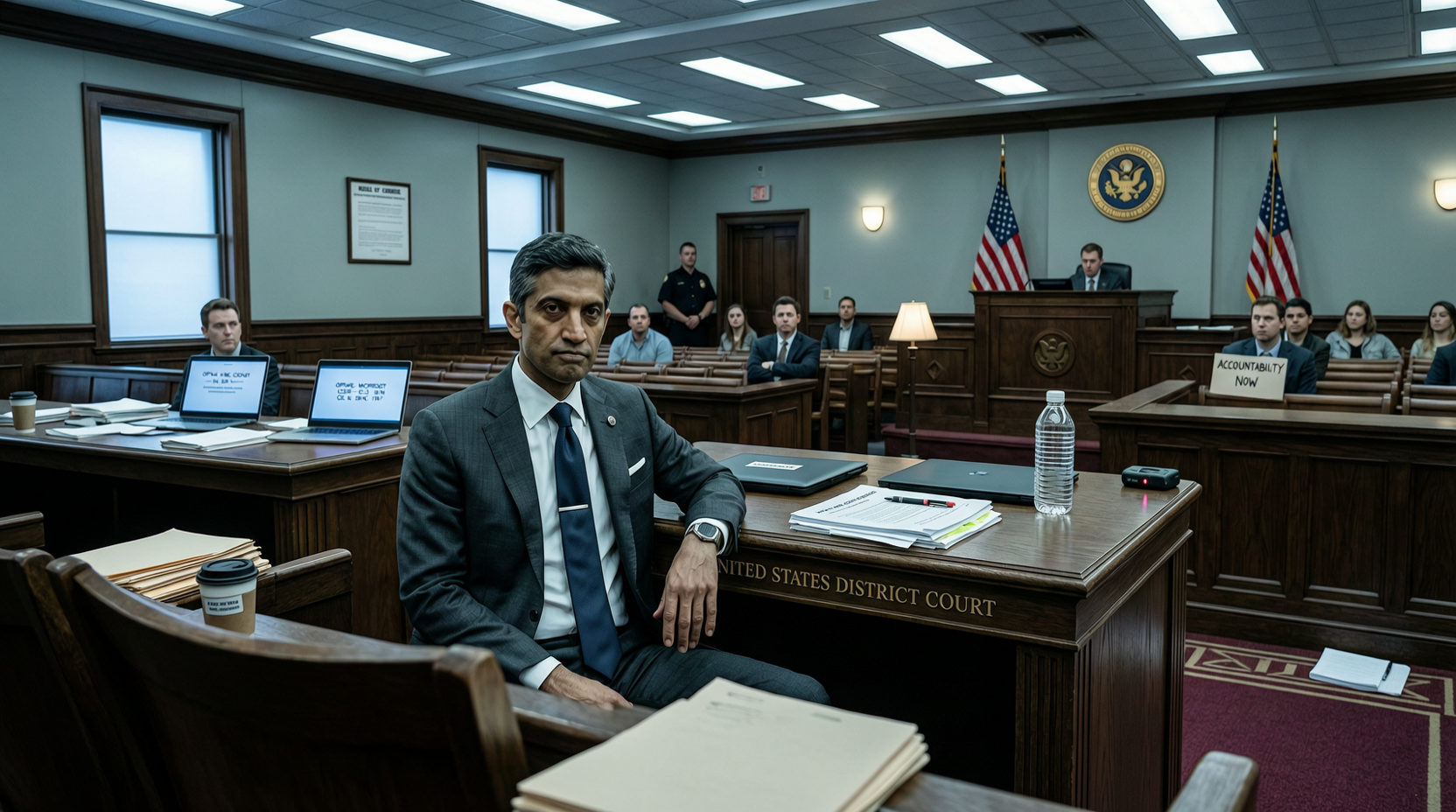
On Monday, the courtroom in Oakland was packed. Satya Nadella took the witness stand — the third tech billionaire to testify in the Musk v. Altman case.
He wasn't there to pick sides. He was there to define his company's relationship with OpenAI.
What Nadella Said
The core testimony was straightforward: Musk never raised any concerns with him personally about Microsoft's investment in OpenAI.
That's not explosive news — but given that Musk's central argument is that "Altman betrayed OpenAI's nonprofit origins, and Microsoft was complicit," Nadella's testimony undermines the foundation of that narrative. If Musk didn't even communicate these "concerns" to Microsoft's top executive, the "secret conspiracy" angle doesn't hold up.
Nadella also revealed something interesting: he himself had worried — about Microsoft becoming "the next IBM."
That comment needs context. In the 2010s, IBM got comprehensively beaten by Amazon AWS in cloud computing because of internal hesitation on cloud strategy. Nadella's worry wasn't about whether OpenAI would succeed, but whether Microsoft betting on OpenAI would repeat that mistake — putting its fate in the hands of a startup.
The Answer He Never Got
Nadella said he was never told why Altman was fired by the OpenAI board in November 2023.
This still looks absurd in hindsight. A company's CEO gets fired by its own board, and the largest investor's CEO doesn't know why. It suggests that OpenAI's governance structure — at least at the board level — had an information gap with Microsoft. Or, more bluntly, the OpenAI board at that time didn't plan to involve Microsoft in the decision.
Musk's legal team is clearly using this information gap to build a "Altman can't be trusted" narrative. But the problem is: not knowing why Altman was fired is a completely different thing from whether Altman betrayed the nonprofit mission.
What This Trial Is Really About
Musk v. Altman is superficially a legal dispute about nonprofit governance. But strip away the legal language, and there's one core question: who controls OpenAI?
Musk's position is that "OpenAI should return to its 2015 nonprofit founding principles." But that stance itself has problems — OpenAI in 2015 didn't have GPT-4, didn't have ChatGPT, and hadn't convinced the world that AGI was buildable. Pulling today's OpenAI back into a 2015 framework looks more like a brand fight than a genuine defense of nonprofit principles.
Nadella's testimony essentially gives Microsoft's answer: We're not OpenAI's controller, and we're not its subordinate. We're an investor and a partner. As for how OpenAI governs itself — that's their business.
But can that "that's their business" answer hold when OpenAI has become a $300+ billion behemoth?
The Trial Continues
Nadella wasn't the last witness. Sam Altman himself and former OpenAI chief scientist Ilya Sutskever have also testified. Upcoming testimony will cover more details — including Musk's offer of a Tesla board seat to Altman (testified by the mother of Musk's children).
This is no longer just a legal proceeding. It's a tech-industry version of Succession — except the prize isn't a media empire, but a ticket into the AI era.
This article is based on court coverage from CNBC, NBC News, Yahoo Finance, and GeekWire. The trial is ongoing and some details may be supplemented or revised in subsequent testimony.