Core Conclusion
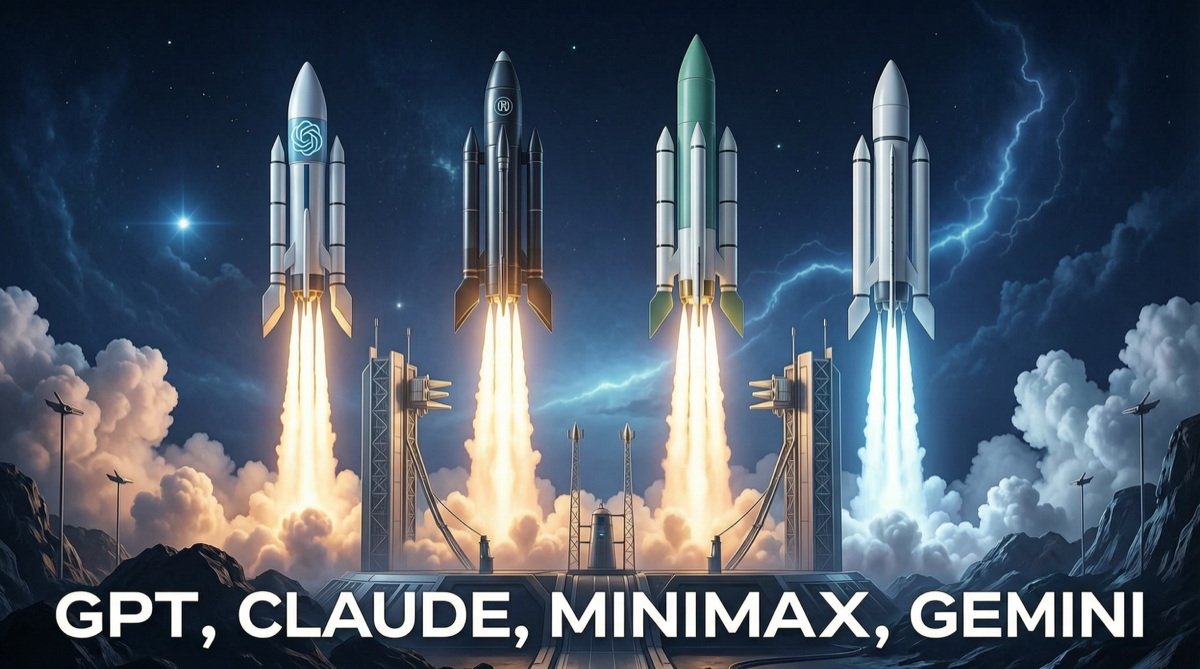
May 2026 is becoming the mostdense model release month in AI history.
Four frontier models — GPT 5.6, Claude Sonnet 4.8, MiniMax M3, Gemini 3.5 — are expected to launch within the same month. This is not a coincidence but alandmark event signaling that model competition has entered a "synchronized iteration" phase. For developers and enterprises, this means today's choice may be outdated by next month.
Four Model Release Signal Summary
| Model | Current Status | Expected Time | Confidence |
|---|---|---|---|
| GPT 5.6 | GPT-5.5 Pro continuously optimizing, Sam Altman hints "will ship again once reaching escape velocity" | Mid-to-late May | Medium |
| Sonnet 4.8 | 512k lines of source code leaked, Cardinal visual memory feature exposed, May 6 developer conference | May 6 or days after | High |
| MiniMax M3 | Core developer confirms "m3 is not far off", M2.7 already showing competitiveness in coding | Late May | Medium-High |
| Gemini 3.5 | Google I/O approaching, Gemini Flash upgrade testing underway | Late May-Early June | Medium |
Additional Dynamics
- GPT-6 "Goblin": Confirmed for September 29, 2026 DevDay release, positioned as "automated AI research intern"
- Kimi K2.6: Confirmed for June release, open weights, targeting long-horizon autonomous execution and swarm orchestration
- Anthropic 83 updates: Claude series has already shipped 83 features/updates in 2026
What This "Model Arms Race" Means
1. Model Lifecycle Dramatically Shortening
"The model you're using today will be outdated by June" — this is not an exaggeration. Looking at the timeline:
- Claude Opus 4.6 → Opus 4.7 → Sonnet 4.8: Three iterations in under six months
- GPT-5.4 → 5.5 → 5.6: Same pace
- Chinese models: DeepSeek V3 → V4, Kimi K2.5 → K2.6 → K3
Model "half-life" is shrinking to 3-4 months. This is a major risk for enterprises locked into a single model.
2. Competition Shifting from "Performance" to "Ecosystem"
"The AI arms race isn't about benchmarks anymore — the real moat is developer ecosystems."
When all frontier models can reach similar levels on SWE-Bench, MMLU and other benchmarks, differentiation comes from:
- Developer toolchains (Claude Code, OpenAI Codex)
- Skills/Plugin ecosystems (Anthropic Skills, OpenAI Codex Skills)
- MCP integration depth
- Agent orchestration capabilities
3. Chinese Models' "Coordinated Launch" Strategy
MiniMax M3 launching alongside GPT 5.6, Sonnet 4.8 is not a coincidence. Chinese models are learning the "ride-the-wave launch" strategy — debuting during US giants' release windows to maximize exposure.
Capability Predictions for Each Model
| Model | Expected Highlights | Potential Weaknesses |
|---|---|---|
| GPT 5.6 | Comprehensive capability ceiling, enhanced image generation | Price may increase |
| Sonnet 4.8 | Cardinal visual memory, Agent infrastructure | Leak event may impact reputation |
| MiniMax M3 | Self-evolving architecture, million-level context, cost-performance | Ecosystem building still needs time |
| Gemini 3.5 | Deep Google ecosystem integration, Flash speed | Enterprise market acceptance TBD |
Actionable Advice
Developers
- Don't lock into a single model: Use routing layers like LiteLLM/OneAPI to flexibly switch between models
- Focus on ecosystem over single-point performance: Claude Code's Skills ecosystem, OpenAI's Codex Skills catalog — these are the long-term value
Enterprise Decision-Makers
- Build a multi-model strategy: Test 2-3 models in parallel in critical business flows to avoid vendor lock-in
- May is the evaluation window: Four new models launchingconcentratedly — this is the best annual timing for model switching/evaluation
Investors
- Model layer investment value is decreasing: When gaps shrink to "interchangeable," infrastructure layer (compute, routing, Agent frameworks) offers higher ROI
- Focus on ecosystem companies: Whoever builds the largest developer ecosystem has the longest moat