Bottom Line First
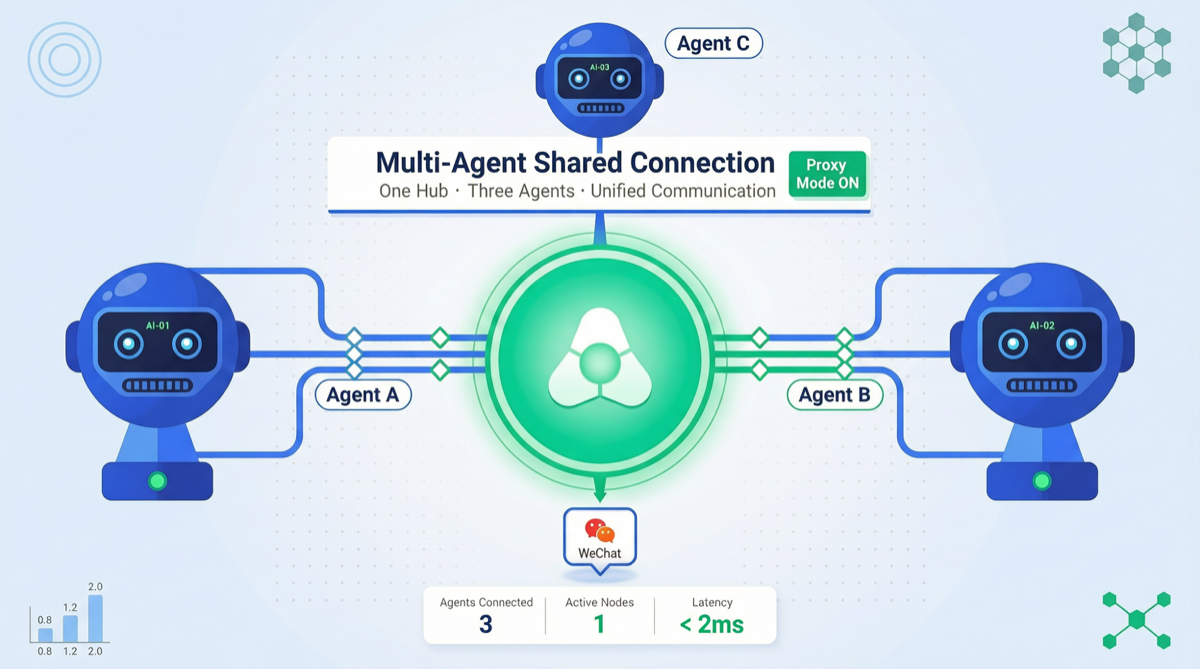
The need to run multiple Agents on a single WeChat account has always existed, but iLink connection mutual exclusion is the core obstacle—two Agents connecting simultaneously triggers a 403 conflict. HermesClaw solves this problem with 500 lines of Python code: as the sole intermediary communicating with iLink, it simulates three independent iLink connections upward, making each Agent believe it exclusively owns the connection.
Architecture Design
WeChat iLink Service
    │
    ▼
┌─────────────┐
│ HermesClaw   │  ← Exclusively manages real iLink connection
│ (500 lines Python)│
└──┬──┬──┬───┘
   │  │  │
   ▼  ▼  ▼
┌────┐┌────┐┌────┐
│Hermes││OpenClaw││OpenCode│
│Agent ││        ││        │
└────┘└────┘└────┘
Key design: HermesClaw maintains a single connection with real iLink downward, and creates virtual iLink endpoints for each Agent upward. Each Agent's protocol interaction is completely isolated and non-interfering.
Core Pain Points Solved
| Pain Point | Before | After HermesClaw |
|---|---|---|
| iLink Conflict | Multiple Agents connecting simultaneously → 403 errors | Single connection distribution, no conflicts |
| Resource Waste | Requires multiple WeChat accounts | One account runs three Agents |
| Management Cost | Maintain three separate connection configs | Unified configuration management |
| Context Isolation | Possible mutual interference | Each Agent has independent sessions |
Technical Implementation Details
- iLink Connection Exclusivity: HermesClaw as the sole iLink client, establishes and maintains persistent connection with WeChat
- Virtual Endpoint Simulation: Creates independent local proxy endpoints for each Agent, simulating complete iLink protocol handshake
- Request Routing: Automatically dispatches to corresponding Agent based on message source, reverse-routes replies
- ACP Bridging: Supports Agent Communication Protocol bridging, enabling cross-Agent communication
The entire project is approximately 500 lines of code, deployable via Docker container or local Python directly, supporting Windows, macOS, Linux.
Why This Solution Matters
As the Agent ecosystem grows increasingly rich, the problem developers face is not "which Agent to use" but "how to use multiple Agents well simultaneously":
- Hermes: Excels at general workflow orchestration, memory management, skills ecosystem
- OpenClaw: Excels at programming tasks, code generation, debugging
- OpenCode: Excels at code review, refactoring, deep integration with specific frameworks
Deploying them on a single WeChat entry point, users can switch between different Agent capabilities through natural language, without caring about underlying routing. This "one entry, multiple brains" model is the ultimate form of personal AI assistants.
Comparison with Other Solutions
| Solution | Multi-WeChat Support | Connection Stability | Configuration Complexity | Cost |
|---|---|---|---|---|
| Multiple accounts running separately | ✅ | High | High (maintain multiple accounts) | High |
| HermesClaw | Single account, multi-Agent | High (single connection) | Low (one-time config) | Zero extra cost |
| ACP multi-Agent orchestration | Requires additional config | Medium | High | Medium |
Action Items
- Users with multiple Agents: Deploy HermesClaw to replace multi-account solutions, reduce management burden
- WeChat ecosystem developers: Study HermesClaw's routing mechanism, applicable to multi-Agent integration on other platforms
- Agent framework maintainers: Consider natively supporting multi-Agent shared channels, reducing community self-bridging needs
- Enterprise users: Evaluate deploying multi-Agents in team WeChat/DingTalk groups, each Agent focusing on different business domains