Bottom Line First
All four tech giants collectively updated AI capital expenditure guidance during 2026 Q1 earnings season, numbers are staggering:
| Company | 2026 CapEx Guidance | Key Signal |
|---|---|---|
| Microsoft | $190B | AI + Cloud driving growth, but mixed market reaction |
| Google (Alphabet) | $180-190B (up from $175-185B), "significantly more" in 2027 | 8th-gen TPU + Gemini Enterprise Agent Platform |
| Meta | $115-135B (accelerating investment) | Llama open ecosystem + AI ad monetization |
| Amazon | AWS +28% | Anthropic 5GW partnership, compute on-demand scaling |
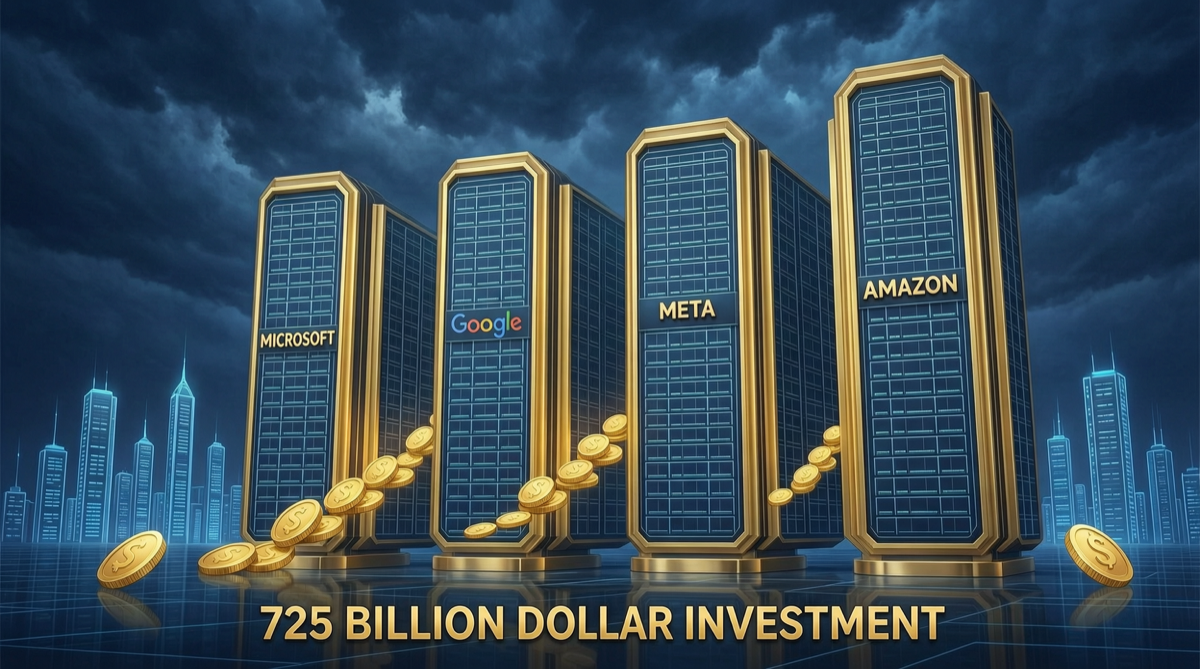
| Combined | ~$725B | 77% increase from $410B last year |
Bridgewater estimated Big Tech AI investment at ~$650B for 2026, but latest guidance already exceeds $725B. Whether this money turns into profit, the market is voting with its feet.
What Happened
Q1 Earnings Key Takeaways
All four companies delivered strong numbers — AI and cloud business are primary growth engines. But market reaction was muted or negative, reasons are clear:
Investors switching from "growth story" to "profit discipline" mode
- Revenue growth ≠ profit growth
- CapEx growth far outpaces revenue growth
- Payback timeline unclear
AI contribution to US GDP reached 75%
- AI is no longer "emergingsector" but economic infrastructure
- Infrastructure characteristics: large investment, slow returns, but indispensable
Power is the core bottleneck
- Data center projects largely stuck in "red tape" approval
- Hyperscalers will be biggest beneficiaries — they have money and resources to secure power and land
Specific Dynamics
- Google Cloud Next 2026: Released 8th-gen TPU inference chip + Gemini Enterprise Agent Platform, directly challenging Nvidia's GPU monopoly
- Anthropic × Amazon: 5GW compute partnership, first 1GW online end of 2026 — Anthropic's compute anxiety is industrymicrocosm
- Meta Llama ecosystem: Open models lower barriers, but Meta's own CapEx continues accelerating
Why It Matters
1. Where Does $725B Go?
This astronomical capital flows mainly to three directions:
| Direction | Estimated Share | Beneficiaries |
|---|---|---|
| AI Chips (GPU/TPU/ASIC) | ~40% | Nvidia, Google TPU, custom chips |
| Data Center Construction | ~35% | Power, cooling, construction, land |
| Network & Storage | ~15% | Fiber optics, switches, storage vendors |
| Talent & R&D | ~10% | AI engineers, researchers |
2. Who's Making Money? Who's Burning It?
Making money: Nvidia (chips), power companies, data center REITs Burning money: The four giants themselves — they're betting on AGI future but short-termcannot see comparable revenue
3. Implications for Small Players
Big Tech is pouring money into infrastructure, which means:
- API call costs trending down long-term (scale effects)
- But may increase short-term (supply-demand imbalance, like OpenAI's doubling)
- Open models + local deployment is best strategy to avoid vendor pricing power
Landscape Assessment
Short-term (within 2026):
- CapEx spending accelerates, but revenue returns lag 12-18 months
- Stock volatility increases — market waits for "profit inflection point"
- AI chips and power infrastructure continue benefiting
Medium-term (2027-2028):
- Google hints 2027 CapEx "significantly more"
- If AI application revenue can't grow synchronously, investor patience will exhaust
- Industry consolidation possible — fast-burning small companies acquired or eliminated
Long-term signal: Four companies' AI investment in one year 2026 exceeds most countries' annual tech budgets. This is not business decision — it's national-level competition privatized.
Actionable Advice
| Your Role | Recommended Action |
|---|---|
| Investors | Focus on AI infrastructure chain (power, chips, data center REITs), not pure application layer |
| AI Entrepreneurs | Leverage Big Tech infrastructure dividend — API prices trend down long-term, but build differentiation moats |
| Enterprise IT | Don't wait for giants to "graciously" lower prices, proactively evaluate open + local deployment |
| Developers | Watch Google TPU 8th-gen — may break Nvidia monopoly, change compute cost structure |
Bottom line: $725B is not a numbers game, it's the largest private sector technology investment in human history. It either opens the AGI era or becomes the largest capital misjudgment since the dot-com bubble. Too early to conclude, but the trend is irreversible.